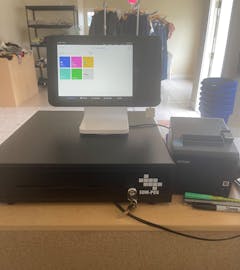
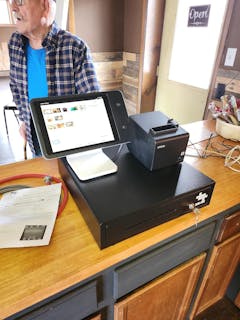
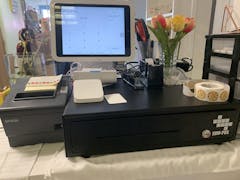

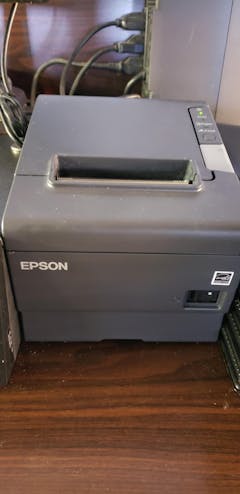
Awesome drawer! Wish I would have bought 3 more! Thanks
Great quality and easy to set up


Sites such as TeluguwapNet 2013 played a complex role: increasing access to regional media while posing legal, security, and preservation challenges. A balanced approach—documenting and preserving culturally valuable material while promoting legal, affordable distribution—best serves researchers, creators, and audiences.
Feature phones running Nokia's Symbian or Java-based operating systems were still highly prevalent alongside early Android devices. Storage space on memory cards (MicroSD) was limited, often ranging from 1GB to 8GB.
In 2013, Teluguwap.net was at the peak of its relevance, serving as the go-to source for several categories of media: 1. Telugu MP3 Songs
The browser finally loaded. Arjun typed the sacred words: teluguwapnet . It wasn't a sleek interface. It was a chaotic wall of blue and purple links, pixelated thumbnails, and flashing banners. But to Arjun, it was a treasure map. teluguwapnet 2013
: Useful for finding both official tracks and film video songs. specifically from 2013?
A look into in India post-2015.
While TeluguWap.Net and similar sites like NaaSongs or MovieRulz provided a service that many relied on, they operated in a legal gray area. Most of the content was hosted without the permission of production houses, leading to frequent domain blocks and copyright strikes. Sites such as TeluguwapNet 2013 played a complex
To understand the significance of Teluguwap.net in 2013, one must recall the technological constraints of the time.
Teluguwapnet (often referred to simply as Teluguwap) was a prominent "WAP" portal. The term WAP stands for Wireless Application Protocol, an early technical standard for accessing information over a mobile wireless network. Websites built for WAP were highly optimized, text-heavy, stripped of heavy graphics, and designed to load instantly on primitive mobile browsers.
How did platforms like Teluguwapnet operate? They were built on simple, automated scripts hosted on servers that prioritized speed over aesthetics. Storage space on memory cards (MicroSD) was limited,
because they host and distribute copyrighted music and films without authorization from the creators or labels.
In the early 2010s, the landscape of digital media consumption in India was vastly different from today’s high-speed streaming era. Before unlimited 4G data packs and platforms like Netflix, Hotstar, or Amazon Prime Video became household staples, mobile internet was expensive, slow, and heavily metered. For Telugu cinema enthusiasts looking to download music, ringtones, and videos on their feature phones or early smartphones, one platform dominated the landscape: .
In 2013, India was still very much a "feature phone" market. Smartphones were expensive and not yet mainstream. Most people accessed the internet on small, keypad-based phones with limited processing power and storage. These phones operated on the , a technical standard designed specifically to deliver internet content in a stripped-down, text-and-image-light format onto tiny screens. Mobile data was predominantly 2G or nascent 3G, which was both slow and costly. Bandwidth was a precious commodity, and loading a heavy, image-rich website like Wikipedia or YouTube was impractical, if not impossible.
The enduring legacy of portals like teluguwapnet 2013 lies in how they engineered content for the constraints of their time. Efficiency was prioritized over fidelity:
Low-resolution images of Telugu film stars and festival greetings tailored for mobile display dimensions. Technical Optimization for Low Bandwidth