Effective Threat Investigation For Soc Analysts Pdf [verified]
Gophish is a powerful, open-source phishing framework that makes it easy to test your organization's exposure to phishing.
For free.
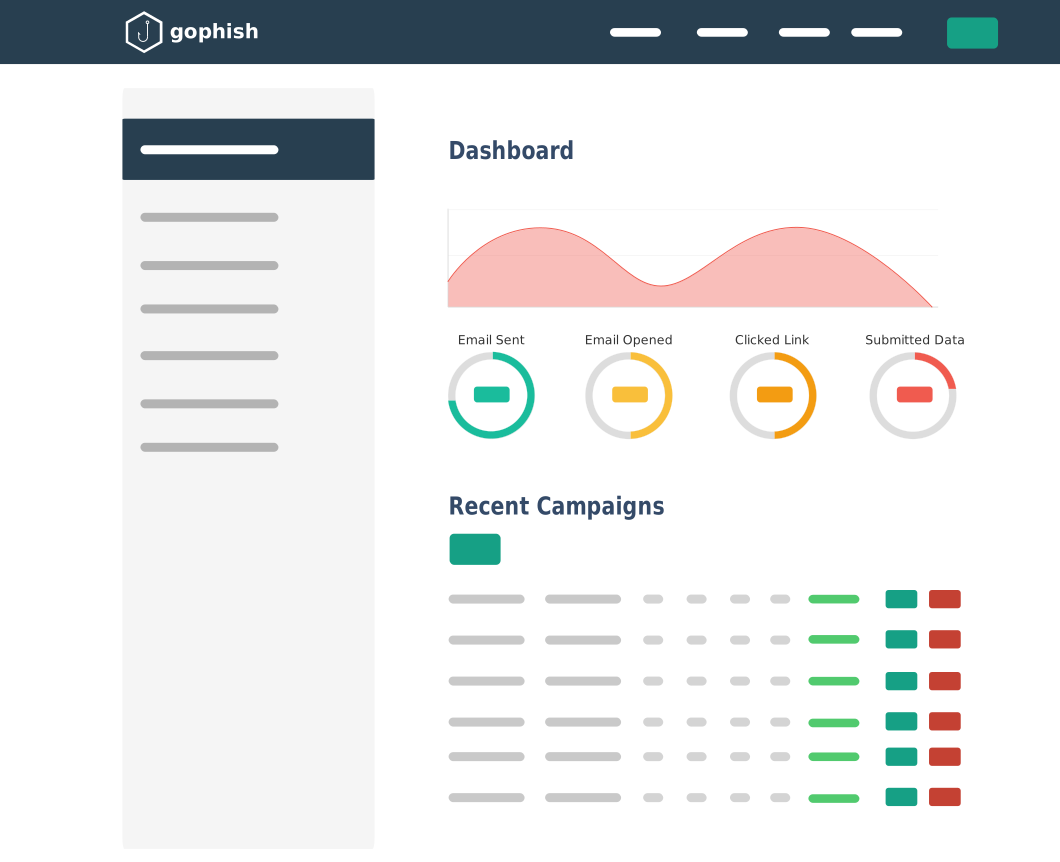
Gophish is a powerful, open-source phishing framework that makes it easy to test your organization's exposure to phishing.
For free.
Gophish makes it easy to create or import pixel-perfect phishing templates.
Our web UI includes a full HTML editor, making it easy to customize your templates right in your browser.
Launch the campaign and phishing emails are sent in the background. You can also schedule campaigns to launch whenever you'd like.
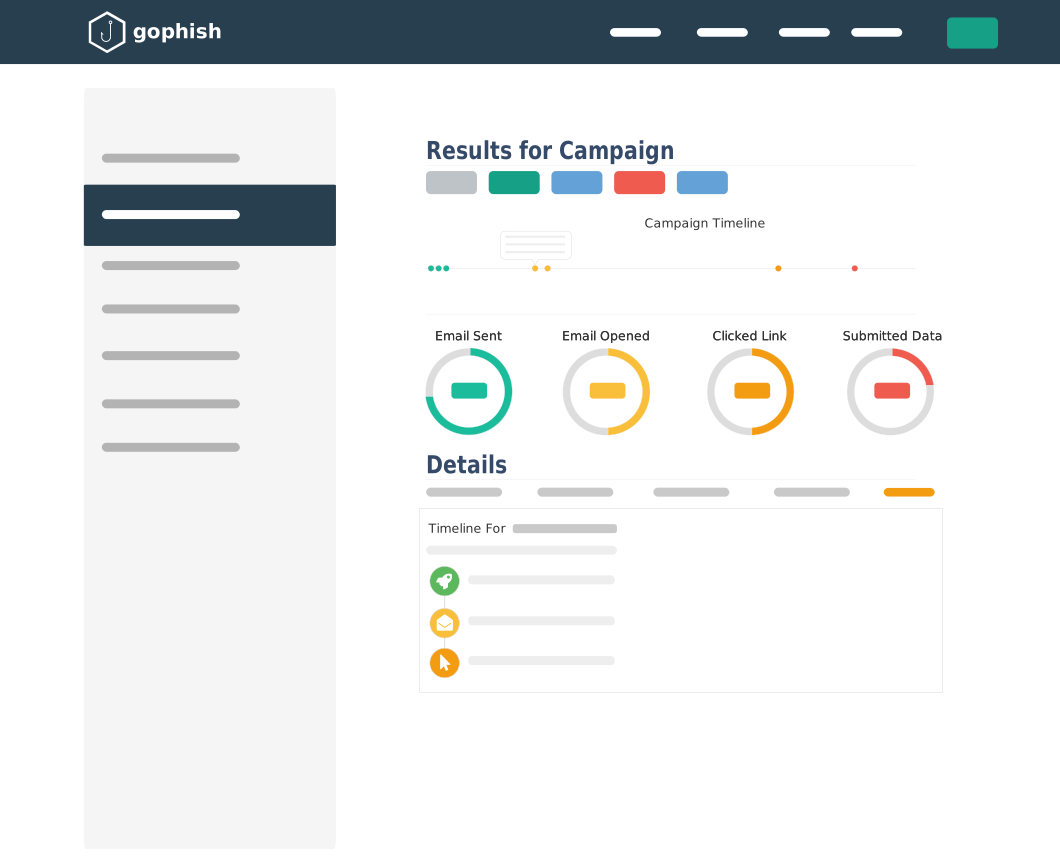
Detailed results are delivered in near real-time. Results can be exported for use in reports.
Analyze command lines for hidden or obfuscated payloads ( -EncodedCommand ).
If you would like to save this playbook for offline reference, printing, or distribution to your security team, click the link below to access the fully formatted PDF version.
Application layer protocols, web protocols, or encrypted channels. 6. Phase 5: Containment, Eradication, and Lessons Learned effective threat investigation for soc analysts pdf
An investigation is not truly "effective" if it isn’t documented. The final step is creating a "Forensic Timeline" or "Case Report." This PDF or internal ticket should contain:
: Neutralizing the threat and removing malicious artifacts. Analyze command lines for hidden or obfuscated payloads
Before looking at the technical details, understand the asset involved.
LSASS memory dumping, brute-forcing, or credential cracking. Before looking at the technical details, understand the
If you cannot explain why it is benign in 2 sentences, treat it as malicious until proven otherwise.
: Mapping a single technique allows you to look "left and right" in the matrix to predict the attacker’s next move or uncover their previous steps. The Cyber Kill Chain
For deep-dive forensics into host-level activities.
| Pivot Point | What to Look For | Why It Matters | | :--- | :--- | :--- | | | High volume connections, Geo-location anomalies, reputation. | Identifies Command & Control (C2) communication. | | User Account | Multiple failed logins, login from impossible travel locations. | Indicates credential theft or brute force. | | File Hash | Unsigned files, files in temp directories. | Identifies malware droppers or payloads. | | Process ID (PID) | Parent/Child relationship anomalies. | Detects process injection or hijacking. |