Instead of just dispensing pills for anxiety, prescribe enrichment. For a dog with separation anxiety: a frozen Kong, a white noise machine, and a predictable departure cue. For a cat with over-grooming: vertical climbing space and puzzle feeders.
To understand behavior, one must understand the endocrine and nervous systems. Fear, for example, is not a "choice"—it is a biochemical cascade.
In veterinary science, animals cannot verbalize their discomfort. Therefore, behavior serves as their primary language. A shift in an animal’s routine actions is frequently the very first indicator of an underlying medical condition. Pain and Illness Manifestation
Veterinary behaviorists help design enrichment programs for captive endangered species to ensure they maintain the natural instincts necessary for potential reintroduction into the wild. The Future: One Welfare zoofilia boy homem comendo galinha link
Veterinary science relies heavily on ethology—the scientific study of animal behavior—to decode these subtle shifts. Behavioral changes are often the very first clinical signs of underlying medical issues. Common Medical Issues Masked as Behavior Problems
Veterinary behaviorists design environmental enrichment programs for captive wildlife to prevent stereotypic behaviors. They use operant conditioning to train animals for voluntary medical procedures. This allows tigers, elephants, and primates to accept blood draws or injections without stressful sedation. Future Horizons in the Field
Veterinary professionals must determine whether an animal’s unwanted behavior is rooted in a medical condition or a psychological issue. Instead of just dispensing pills for anxiety, prescribe
Just as veterinary science emphasizes vaccines and parasite prevention to protect physical health, it also champions preventive behavioral care to secure mental health. Behavioral problems are the leading cause of pet abandonment and euthanasia worldwide. Preventing these issues before they develop is a critical welfare directive. Socialization Windows
The story of Kibo and Dr. Kim spread throughout the wildlife community, highlighting the importance of understanding and addressing the emotional and psychological needs of animals in our care. As we continue to learn more about the intricate lives of animals, we are reminded of the profound impact that compassion, empathy, and science can have on their well-being.
In domestic pets, behavioral science focuses heavily on separation anxiety, resource guarding, and socialization. Veterinary clinics increasingly adopt "Fear Free" techniques. These practices minimize the stress of medical exams through pheromone diffusers, treats, and low-stress handling. Equine and Production Animals To understand behavior, one must understand the endocrine
Animals form involuntary associations between stimuli. In a clinic, a dog might associate the smell of alcohol wipes with the pain of a needle. Veterinary teams use counter-conditioning to change this emotional response, pairing the trigger with a high-value treat.
For example, a dog with severe separation anxiety that doesn't respond to training alone may have a serotonin dysregulation. A veterinary behaviorist can prescribe SSRIs while simultaneously creating a desensitization protocol.
Upon closer inspection, Dr. Mwanga noticed that Aki's symptoms were similar to those of a chimpanzee who had been exposed to a toxic substance. She collected blood samples from Aki and several other affected troop members and sent them to the nearby primate research center for analysis.
Add Sense for Chrome works in both the build-in Sense client and in mashups using the Capabilities APIs
Charts displayed with the API through getObject and visualization.show will be tagged.
Used app(s) will be displayed in the bottom right corner.
Properties and other buttons will work just as in the client.
If your mashup shows charts from more than one app, all will be listed.
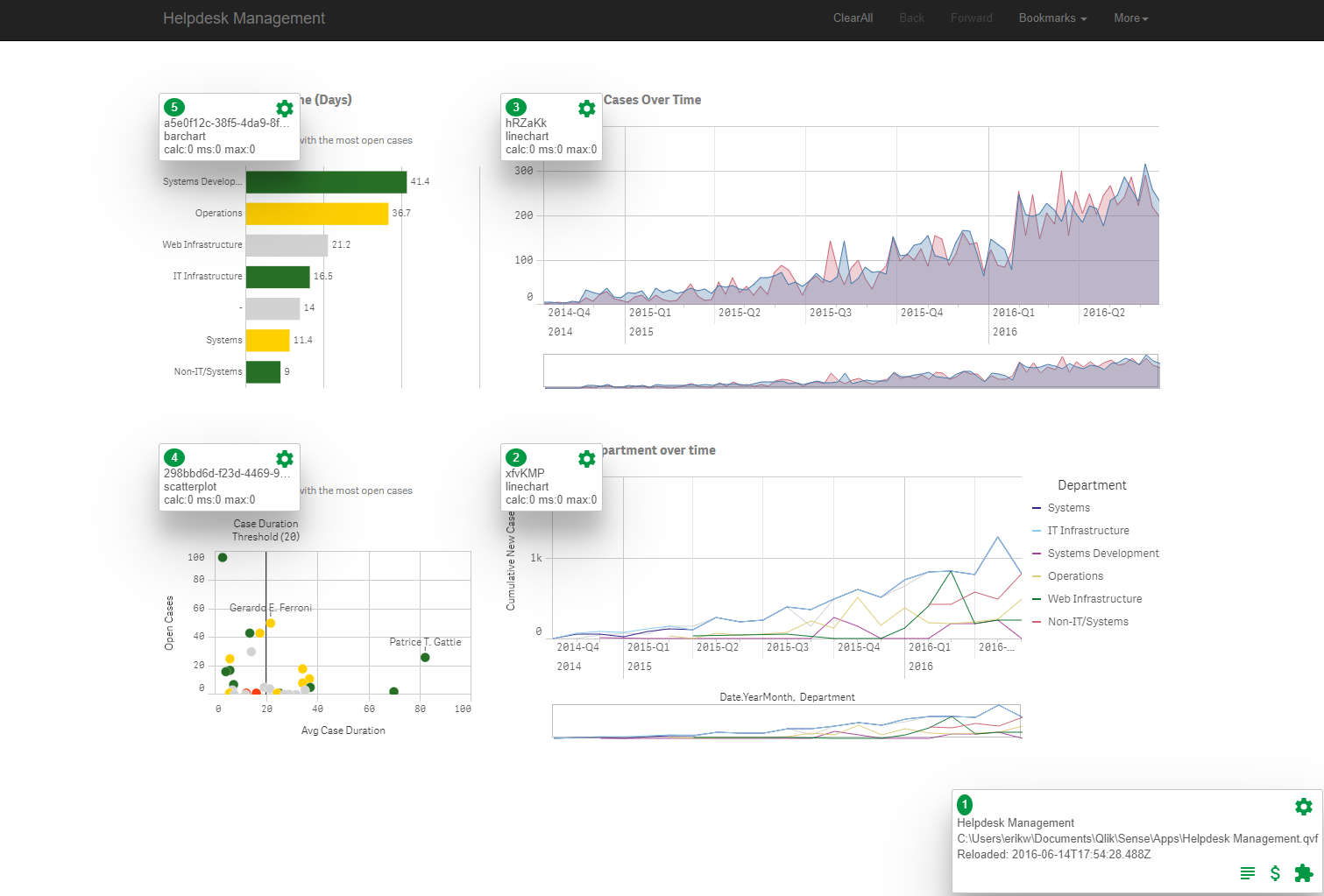
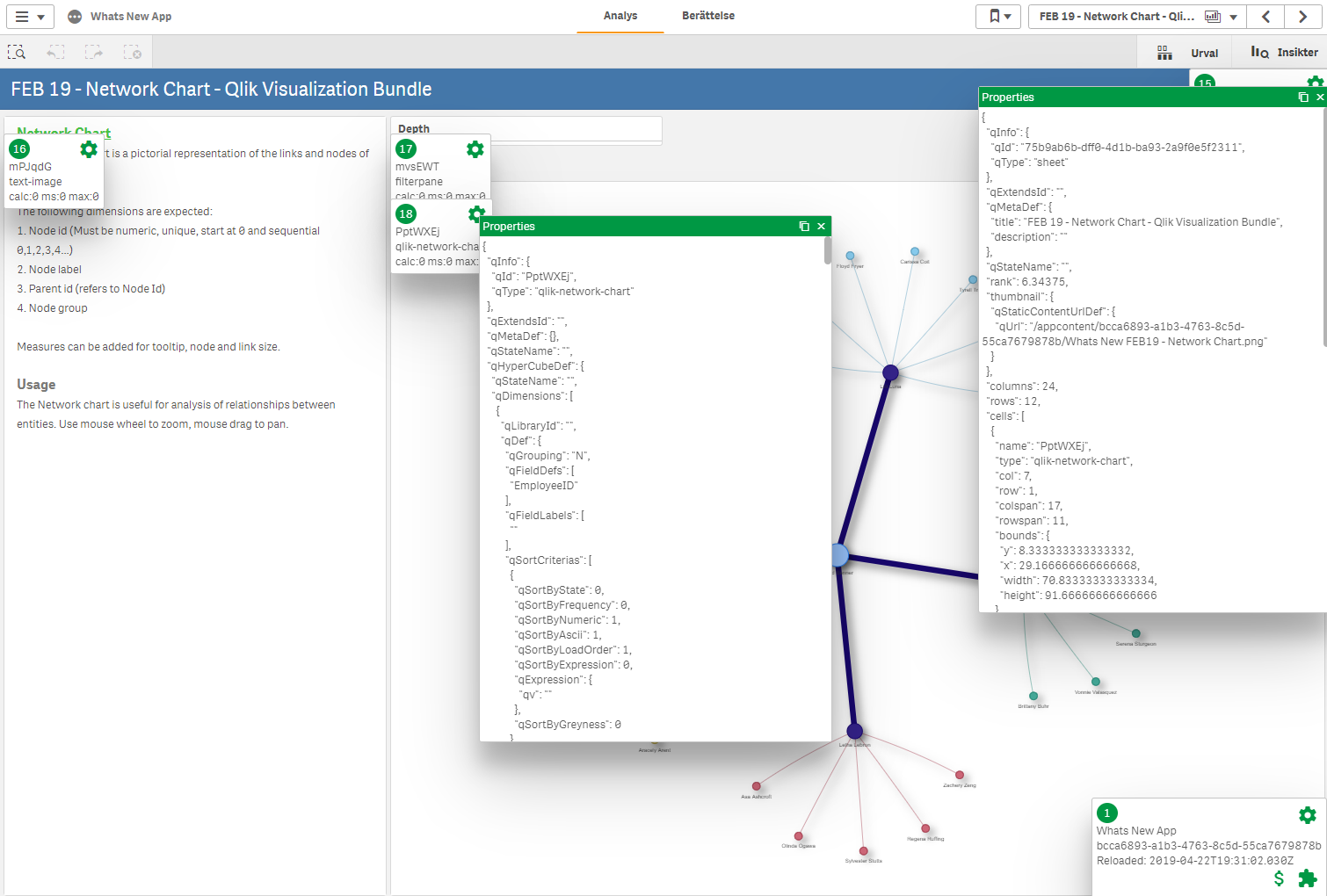
For all charts, sheets and the app you can click on the cogwheel.
That will display the properties for the object.
Use this to troubleshoot or to investigate what settings produce this chart.
You can display several objects properties at the same time, to make comparisons.
Properties can also be copied to clipboard.
From the app box you can inspect the script, variables and app properties.
Windows can be open at the same time and moved.
You can also copy window contents, complete or partly, to the clipboard.
If you do not have access to the script the script button will not be available.
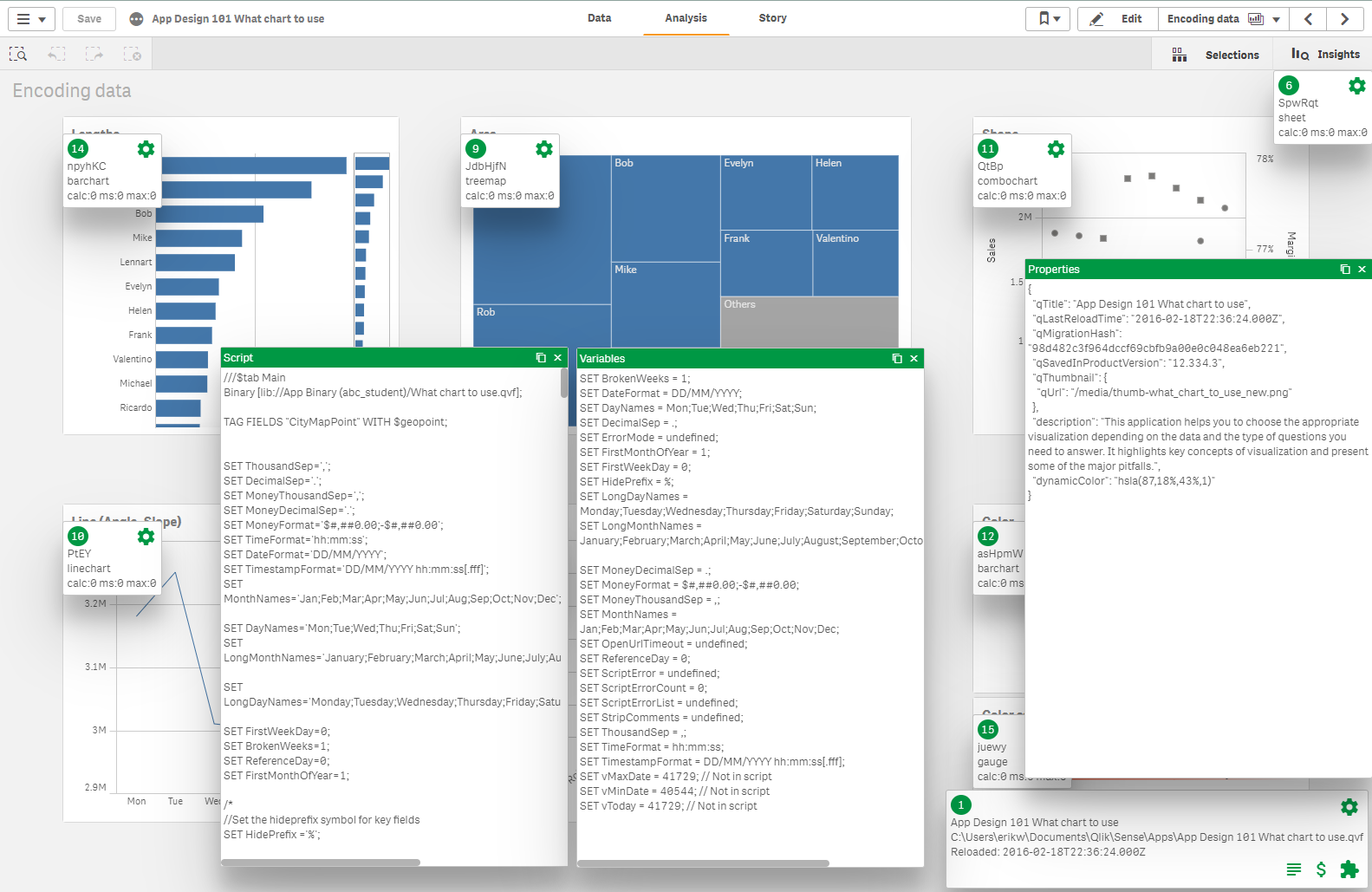
You can also easily see what extensions and charts are used in your app.
Just click on the extensions button in the app info box.
You will get a list of all axtensions and built-in charts are used in your extension, with title and sheet title
Master objects are also included.
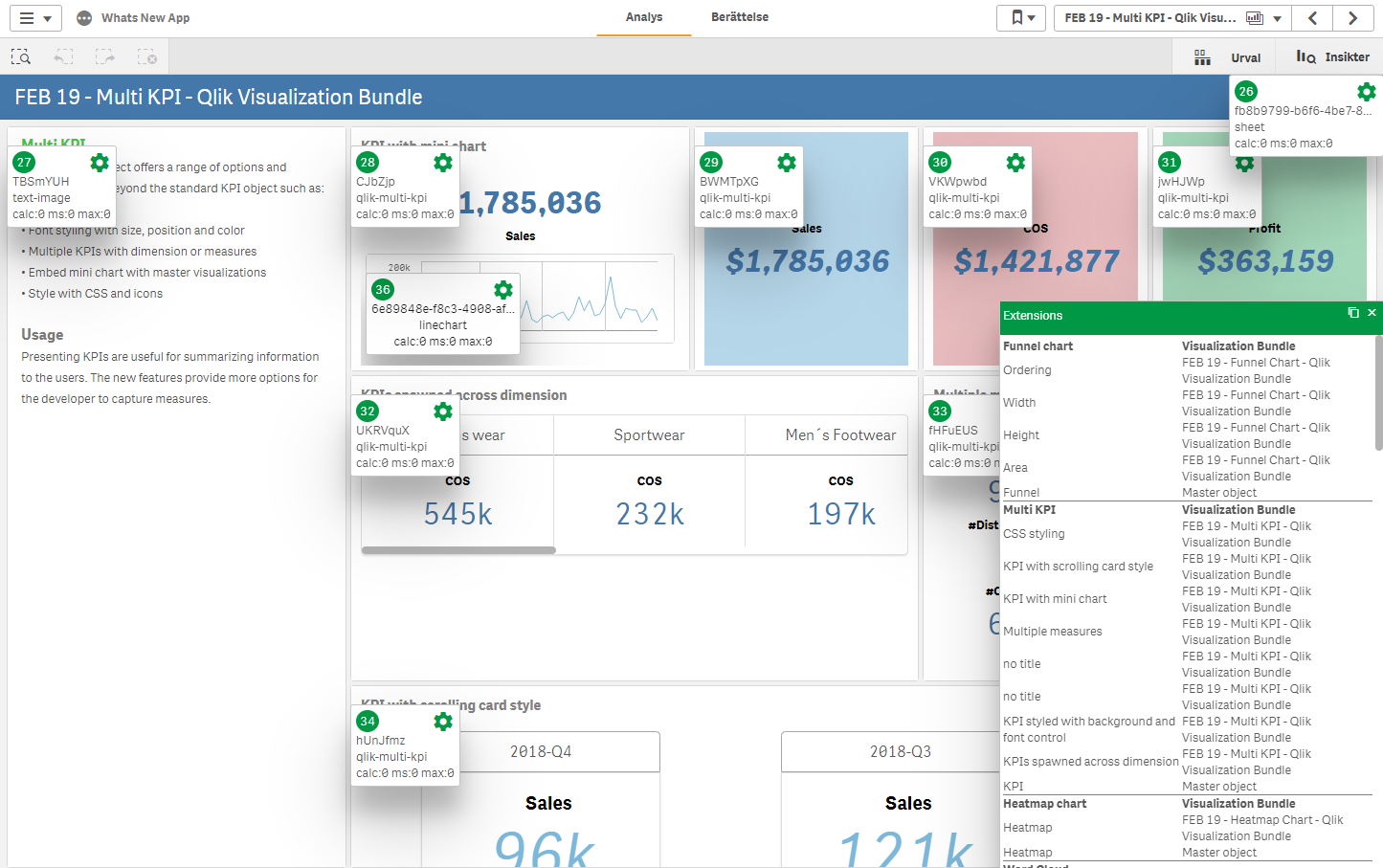
The extension can also help you find performance problems.
When you enable the extension on a page, whether it's the standard client or a mashup, it will start recording recalculation times.
Every time an object is revalidated then extension will register time elapsed for recalculation.
It will also count how many revalidations has occured.
If the object is no longer on the screen, the extension will continue to monitor recalculations, so when you re-enable it you will get all the statistics.